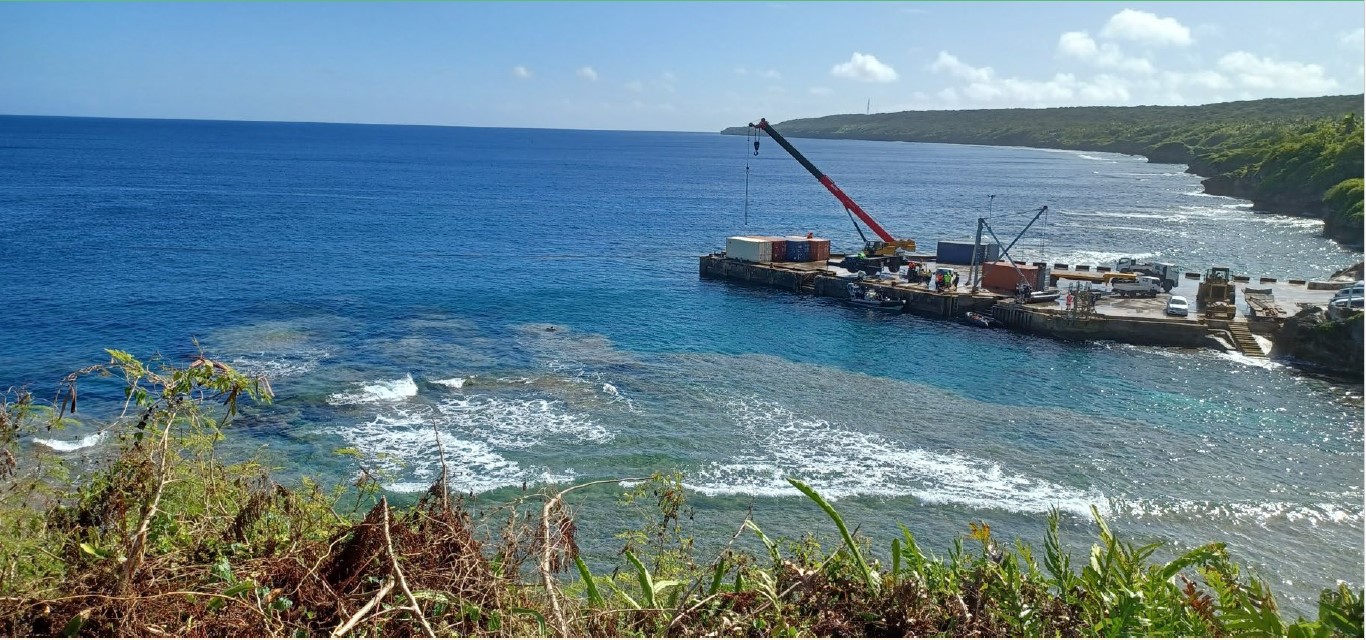
The Department of Transport has completed a key assessment identifying Niue’s most critical transport links under the Asian Development Bank (ADB)‑funded Climate and Multi‑Hazard Risk Assessment for Niue’s Transport Network.
The assessment identifies transport assets that are essential to everyday life, emergency response, and the economy, and examines how they are affected by natural hazards that are increasing in severity due to climate change. Hazards assessed include cyclones, coastal flooding, windstorms, extreme temperatures, and tsunamis.
The study assessed Niue’s wharf, road network, and airport, identifying assets that are vital to keeping the island connected:
• Key roads: Tuapa Boulevard, Tamakautoga Boulevard, Tapeu‑Porritt Road, Alofi‑Liku Road, and Halamahaga Road
• Wharf infrastructure: Wharf deck, outer walls and fenders, and the wharf approach road
• Airport infrastructure: Runway, air traffic control system, fire‑fighting capability, ground handling equipment, and communications systems
These assets are considered critical to ensure the transport network can operate during normal conditions and remain functional during emergencies.
The assessment confirms that the wharf is the most critical transport asset in Niue. All fuel and most food supplies are imported through the wharf, and any disruption would have serious impacts on daily life, essential services, and the economy. Without a functioning wharf, air services and road transport would also be severely affected. After the wharf, the most critical assets are key sections of the road network that connect communities to vital services such as the hospital, airport, wharf, supermarket, and power station, particularly the busy west coast coastal road. The airport is also essential to Niue’s economy, supporting tourism, freight, and essential travel. The assessment highlights that critical airport systems must remain operational to ensure the continued safe operation of air services.
The assessment also estimates the economic cost of disruptions to the transport network, using past repair costs and potential future impacts. While Niue has experienced relatively few major damaging events in recent years, the findings highlight the importance of proactive planning as climate‑related risks continue to increase.
The findings will be used to prioritise maintenance, guide future upgrades, support funding applications, and strengthen asset management to build a more climate‑resilient transport network for Niue. The Department of Transport acknowledges the support of the ADB‑funded consultants and the valuable contributions of local experts, whose knowledge and technical expertise were vital to completing the Climate and Multi‑Hazard Risk Assessment for Niue’s Transport Network.