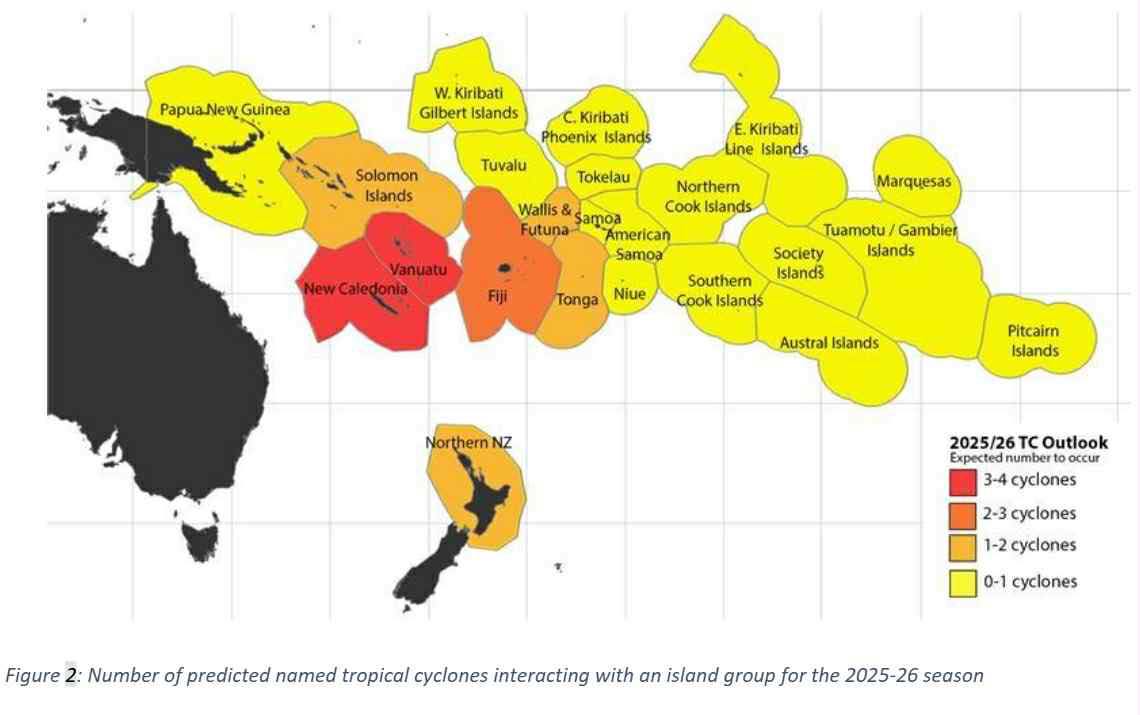
The 2025–2026 Tropical Cyclone Season for Niue officially begins on 1 November 2025 and will continue through to 30 April 2026.
The Southwest Pacific region, 4 to 9 tropical cyclones are expected to develop during the season. About 2 to 4 cyclones are forecast to intensify to Category 3 to 5, posing potential risks to affected areas, according to Earth Sciences New Zealand (ESNZ).
Image.
The expected number of tropical cyclones in the vicinity of Niue, indicates a reduced risk, with an expected range of 0 to 1 tropical cyclone likely to affect the island. While this suggests a relatively quiet season locally, it is important to remain prepared. Severe tropical cyclones forming in more active regions of the Pacific may still migrate into Niue’s vicinity, bringing possible impacts despite the lower forecasted risk.
The number of tropical cyclones affecting Niue’s Exclusive Economic Zone (EEZ) varies considerably from year to year, influenced by the El Niño–Southern Oscillation (ENSO). ENSO conditions are currently borderline La Niña, with La Niña or La Niña-like patterns very likely to become established over the coming three-months period (November 2025 – January 2026). The event is expected to be short-lived, with a return to ENSO-neutral conditions likely in the first quarter of 2026.
"Be wary specially residents in low-lying coastal areas and exposed areas. Severe trough systems can bring cyclone-like effects. Now more than ever, it is paramount to check the Niue Meteorological Service daily weather forecast in order to stay alert and prepared," says Rossy Mitiepo, Director of the Niue Meteorological Service.
The Niue Meteorological Service urges all residents to continue following official advice and warnings regarding tropical cyclones. It is essential to understand the potential impacts of severe weather systems, which may include:
🌬️ Strong and gale-force winds
🌊 Damaging swells and coastal inundation
🌧️ Heavy rainfall and flash flooding
These conditions can pose serious risks to lives, property, the environment, and vital sectors such as transport, utilities, and agriculture.
Remain vigilant and informed throughout the cyclone season to ensure the safety and resilience of our island community.